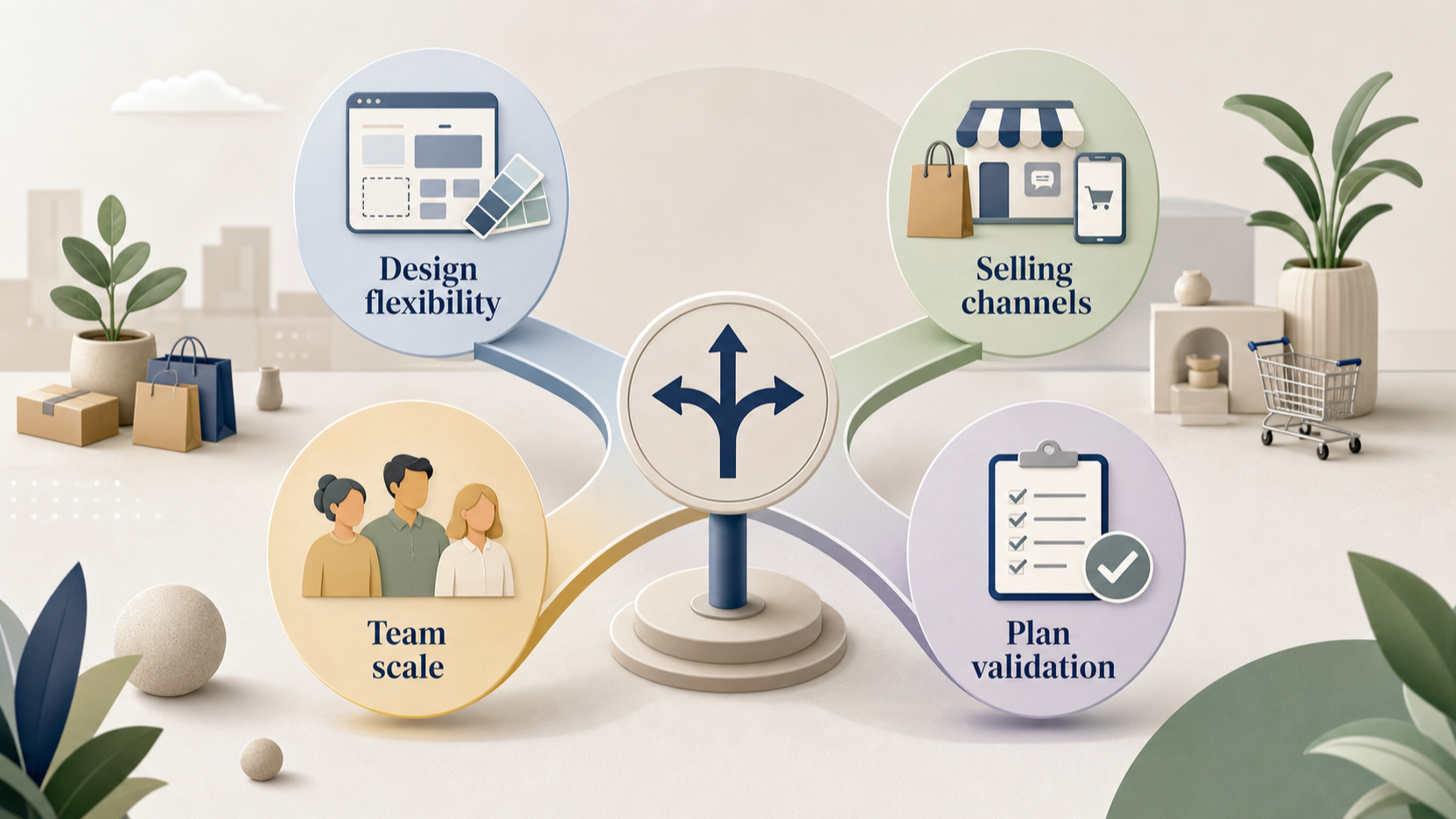
Choosing an ecommerce platform is less about finding a universal winner and more about selecting a workable route for the way you intend to sell. For a UK small business, that means balancing launch speed, design control, selling channels, in-person needs, team access and the plan terms you can actually use.
Verdict: Choose the Platform That Matches Your Store Model
AI-generated illustration — not a retailer product photo.
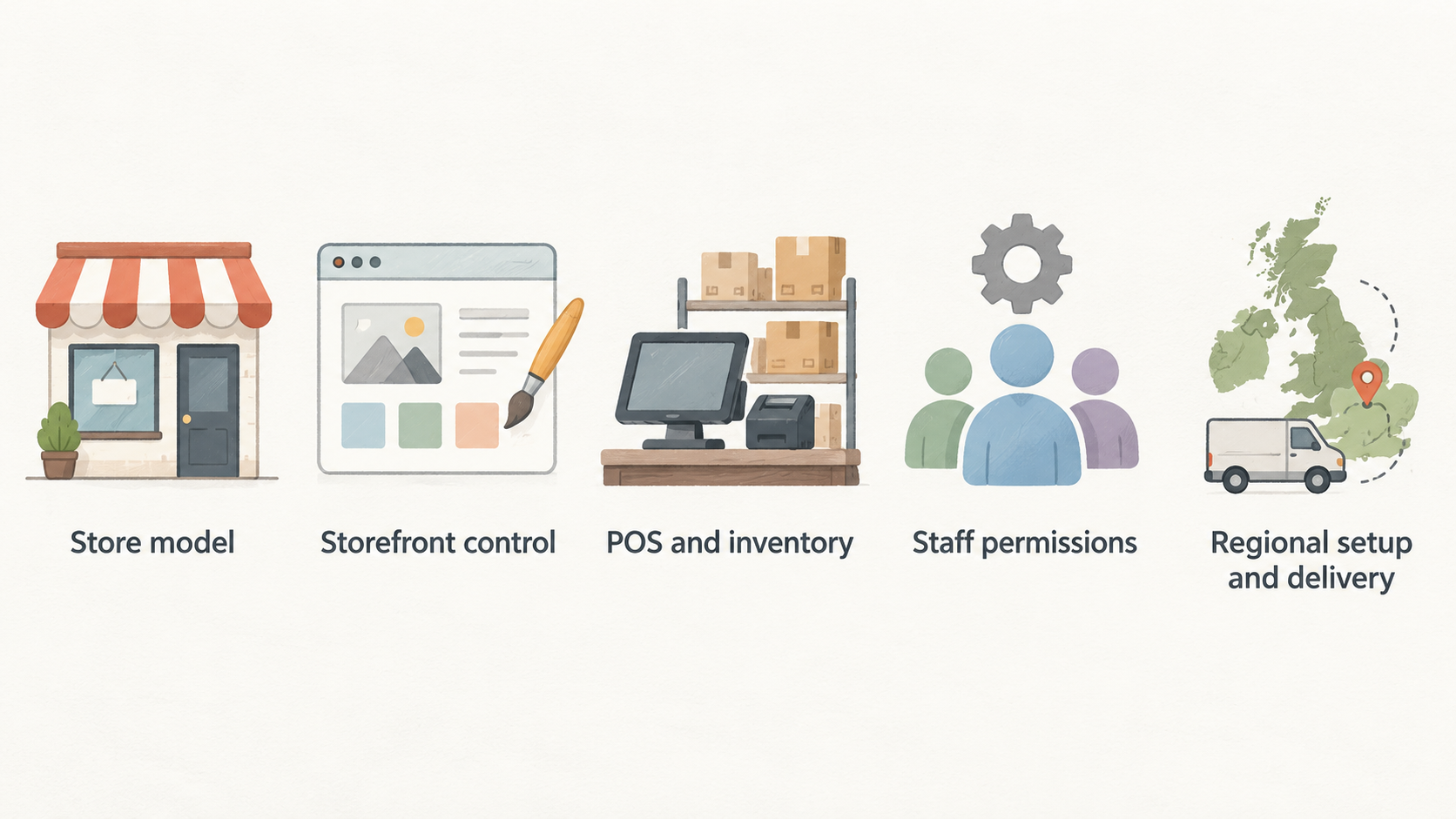
Start with the store model, not a league table. A solo founder building a first online shop may value a quick, low-code route and strong control over the storefront. A retailer selling at a counter as well as online may put more weight on POS, inventory and staff permissions. A growing business with regional ambitions needs to check whether its chosen plan supports the team size, regional setup and delivery requirements it expects.
Shopify’s UK plan information makes it a credible first shortlist for businesses that need online and in-person selling, multichannel activity, or a clear path to more staff accounts and region-specific tailoring. Wix is a credible first shortlist for founders prioritising customisable storefronts, no-code creation and a template-led start.
Neither is automatically “best” for every small business. Use the platform that fits the operating model you have now, then validate the plan-level conditions that could change the decision before committing.
How to Compare Ecommerce Platforms for a UK Small Business
AI-generated illustration — not a retailer product photo.
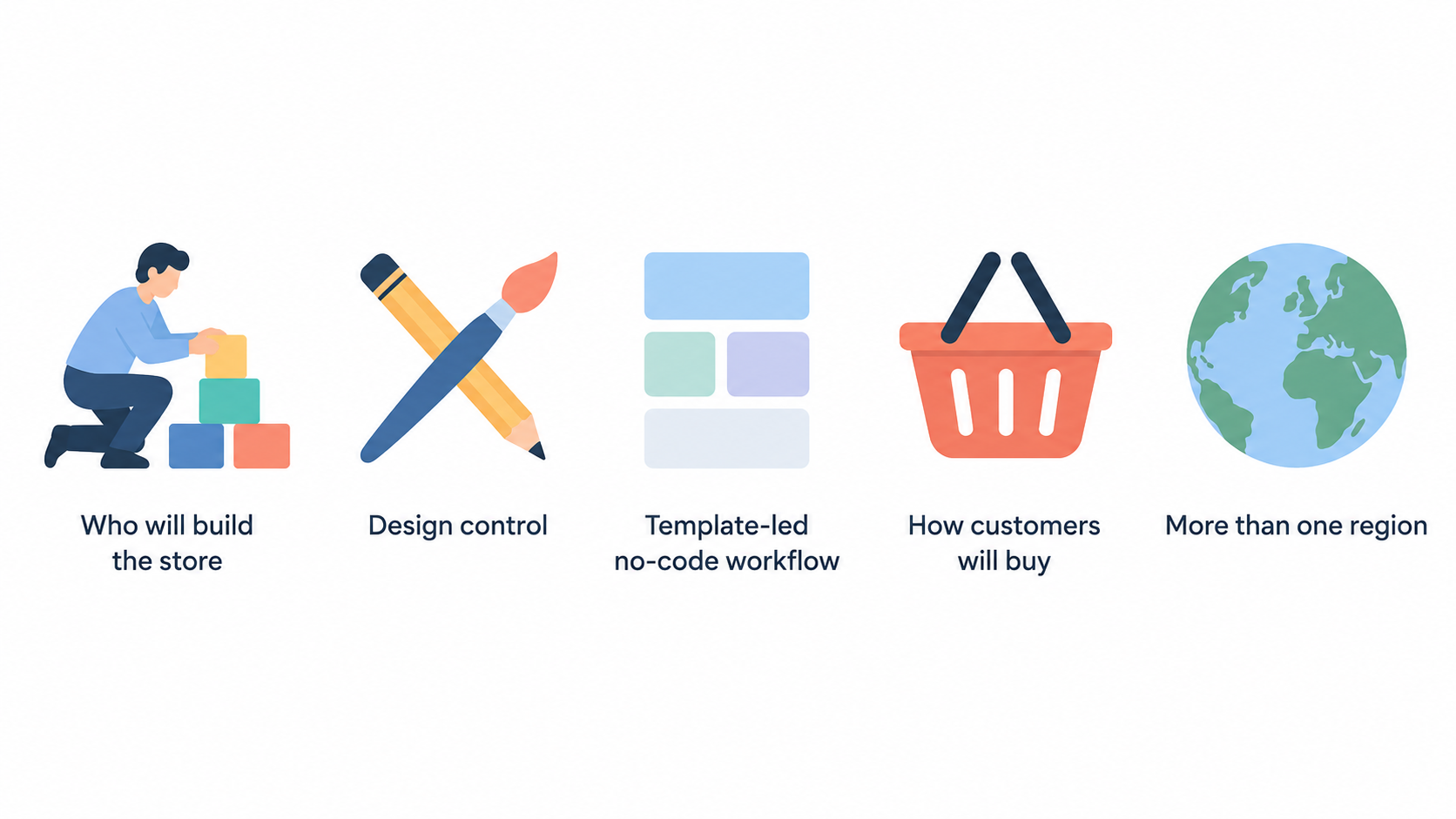
Build a shortlist around the decisions that will be difficult or expensive to reverse later. Begin with launch: who will build the store, how much design control is needed, and whether the team wants a template-led no-code workflow. Wix presents its ecommerce offer around custom storefronts, built-in AI features and hundreds of customisable templates, which makes these useful questions for design-led or self-managed launches.
Next, map how customers will buy. Will the business sell only through its website, or also at a physical counter, through other channels, or in more than one region? Shopify describes online, in-person and multichannel selling across its UK plans, while its higher tiers add more staff accounts and region tailoring. That makes channels, staff access and regional requirements practical comparison criteria rather than optional extras.
Then compare the operational details: payment-card rates, POS requirements, shipping needs, checkout control, add-ons and the effort of moving later. These are plan-dependent questions, so a headline price or a generic feature label is not enough.
Finally, treat published “best platform” lists as a way to discover categories to investigate, not as a substitute for a fit assessment. Independent editorial coverage itself separates paths for WordPress, physical stores, design, beginners, large businesses and other needs. A short, scenario-led shortlist is more useful than forcing unlike businesses into one ranking.
Strengths: Where Leading Platforms Fit Best
AI-generated illustration — not a retailer product photo.
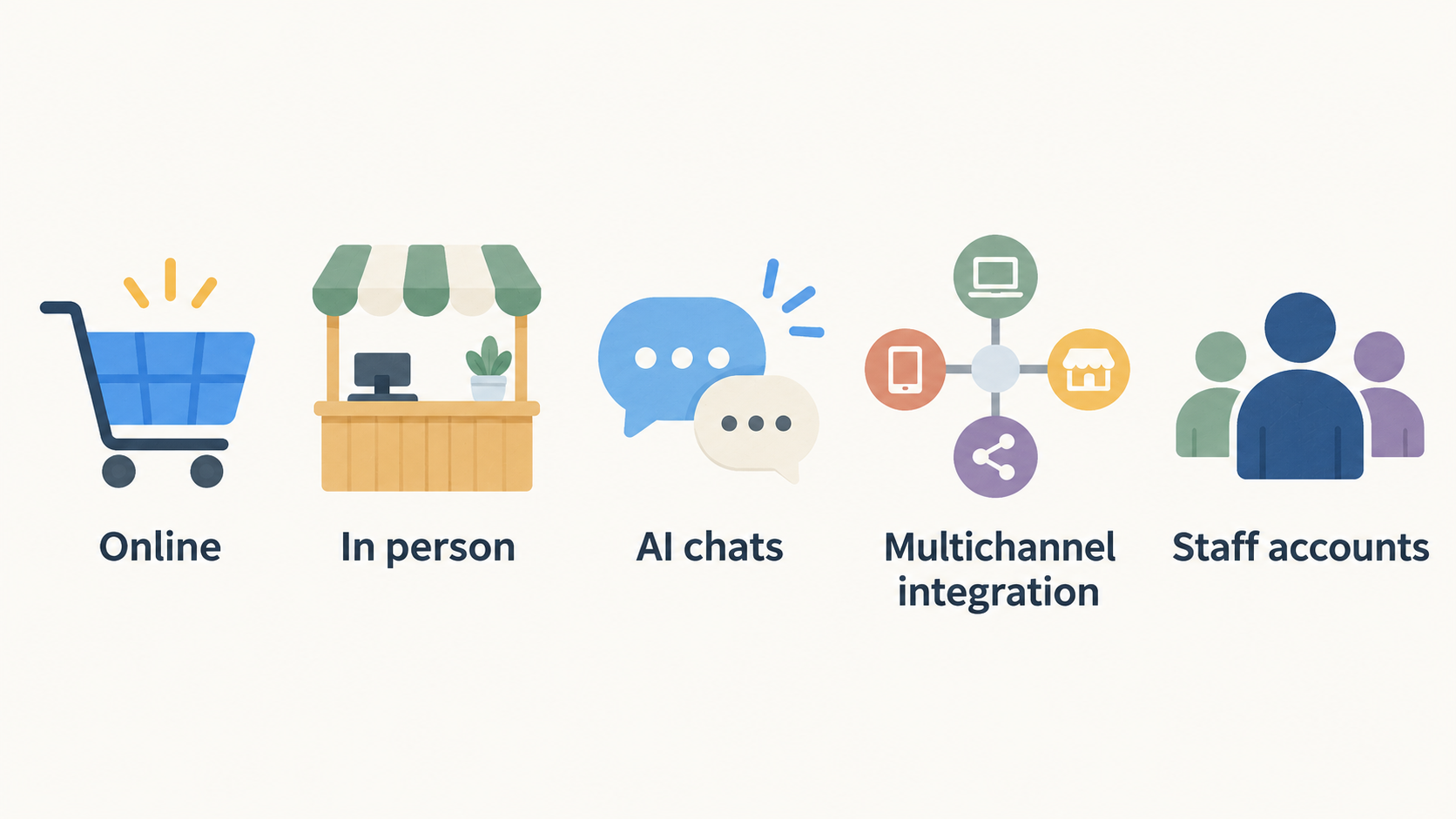
Shopify’s clearest documented fit signals are operational and multichannel. Its UK pricing page says its plans support selling online, in person and in AI chats, and describes multichannel integration. That is relevant when a small business expects its website to sit alongside a counter, card reader or sales presence on more than one channel.
The plan ladder also gives buyers concrete scaling questions to test. Shopify lists Basic for solo entrepreneurs, Grow with up to five staff accounts, Advanced with up to 15, and Plus with unlimited staff accounts. Advanced includes regional store tailoring and live third-party shipping rates; Plus lists a fully customisable checkout, up to 200 POS Pro locations and unlimited B2B catalogues. These are not reasons for every small shop to upgrade. They are signs that Shopify deserves close consideration when staff growth, regional operations, shipping configuration, POS scale, checkout control or B2B complexity are already part of the operating model.
Wix’s clearest documented fit signals sit at the storefront-creation end of the decision. Its ecommerce page highlights high-converting storefronts and product pages that can be customised for a brand, alongside no-code creation and built-in AI features. It also offers hundreds of free, fully customisable ecommerce templates for mobile and web stores. The published template categories include Fashion, Electronics and Home & Decor, giving a useful visual starting point for founders who want to adapt an existing store style rather than begin from a blank canvas.
The practical distinction is not that one platform is universally stronger. Shopify’s documented strengths are especially relevant to channel, team and physical-sales requirements; Wix’s are especially relevant to a customisable, no-code, template-led ecommerce build. Use those as fit signals, then validate the exact plan and configuration required.
Limitations: Costs, Plan Boundaries and Operational Trade-offs
A suitable-looking platform can become unsuitable once the plan details are examined. Check eligibility and availability for the features you actually need, rather than assuming that a feature shown on a pricing page applies to every tier. Shopify, for example, lists different staff-account allowances by plan, with regional tailoring and live third-party shipping rates shown on Advanced, and fully customisable checkout, extensive POS capacity and B2B catalogues shown on Plus.
Payment costs also need a direct UK review. Shopify’s published UK page lists card rates starting from 2% + 25p on Basic, 1.7% + 25p on Grow, 1.5% + 25p on Advanced and 1.3% + 25p on Plus. “From” is important: use the live plan terms to understand what applies to the business, its payment setup and its sales mix. Do not treat these figures alone as a complete cost forecast.
For a physical retailer, validate whether the required POS capabilities, staff roles, inventory handling, pickup and delivery processes fit the intended setup. Shopify describes POS Pro as an add-on for physical storefronts and lists capabilities such as staff roles and permissions, in-store inventory management, pickup and flexible delivery. That should prompt a requirements check, not an assumption that every POS need is included.
For a design-led launch, validate the template, customisation and workflow needs in the actual Wix plan and configuration under consideration. For either platform, also account for integrations, optional services, migration effort and internal training. A sound decision is one whose ongoing operational requirements remain affordable and manageable after launch.
Alternatives: When Another Ecommerce Platform May Be a Better Fit
Look beyond Shopify and Wix when the business has a constraint that neither route answers cleanly. Independent editorial coverage of ecommerce platforms separates categories including WordPress, platforms without limits, large businesses, physical stores, small businesses, design and beginners. That taxonomy is useful because it acknowledges that an alternative path may be worth researching when the store’s structure or priorities differ substantially from a standard hosted-store launch.
A WordPress-oriented business, for example, may want to investigate the WordPress category before deciding that a hosted platform is the right long-term fit. A business seeking broad flexibility may investigate the “without limits” category. A retailer with unusually demanding physical-store operations, a larger organisation, a design-first concept or a beginner-focused need can likewise use the relevant category as a research direction.
A category is not a recommendation. It does not establish that a named alternative is cheaper, easier, better-performing or suitable for your business. Before adding an alternative to the final shortlist, verify its current UK pricing, payment options, required extensions, staff controls, POS support, migration approach and any technical ownership it creates. The goal is to identify a plausible route for further comparison, not to replace one unsupported universal winner with another.
Shortlist: Match Your Store Scenario to a Platform Path
Use the following starting paths to organise research:
- Solo online seller: shortlist Shopify Basic if the business wants a plan presented for solo entrepreneurs and expects to sell online, in person or in AI chats. Also shortlist Wix if a customisable, no-code, template-led storefront is the higher priority. Compare the live UK terms and the work needed to launch each route.
- Small team: investigate Shopify Grow when up to five staff accounts and the platform’s multichannel position match the operating plan. Confirm which roles, permissions and supporting processes the team needs before treating the account allowance as sufficient.
- Omnichannel or physical retailer: investigate Shopify and its POS options when website sales need to work with in-person selling. Validate POS Pro requirements, staff roles, inventory, pickup and delivery workflows, plus the relevant plan and add-on costs.
- Design-first founder: investigate Wix when brand customisation, no-code creation and a choice of ecommerce templates are central. Review the real template options, mobile presentation and the exact configuration required for the catalogue and sales workflow.
- WordPress user or high-flexibility buyer: investigate the relevant alternative category identified by independent editorial coverage, then undertake a separate current review. Do not assume the category answers price, support or operational questions.
- Regional, B2B or larger-team ambition: investigate whether Shopify Advanced or Plus capabilities are genuinely needed. Regional tailoring is listed on Advanced, while Plus lists unlimited staff accounts, B2B catalogues and a fully customisable checkout; confirm that the commercial case justifies the plan.
Before starting a trial or migration, check current UK plan terms, card rates, payment eligibility, staff limits, POS needs, shipping requirements, checkout requirements, integrations and the practical cost of changing course later.
Frequently Asked Questions
Which ecommerce platform is best for a UK small business?
There is no defensible universal choice from the available evidence. Start with the store model: Wix is a strong route to investigate when a no-code, customisable, template-led storefront is central; Shopify is a strong route to investigate when online and in-person selling, multichannel activity, staff scaling or regional setup matter. Verify the current UK plan terms before purchase.
Should I choose Shopify or Wix for a new online store?
Choose the route that matches the first operating requirements. Wix highlights custom storefronts, AI-assisted features, no-code creation and hundreds of customisable ecommerce templates. Shopify highlights online and in-person selling, multichannel integration and plan-based scaling for staff and regional needs. Compare a realistic build and operating workflow, not just the marketing headline.
What ecommerce platform features matter most for selling in person and online?
Assess whether online selling, counter or card-reader sales, inventory, staff roles, pickup, delivery and sales channels need to work together. Shopify describes these areas across its selling and POS information, but the required capabilities may depend on the plan or POS add-on. Write down the physical workflow first, then validate it against current terms.
How should I compare ecommerce platform pricing in the UK?
Compare the live plan that fits the required workflow, rather than the lowest advertised entry point. Include card rates, staff allowances, POS needs, shipping requirements, checkout requirements and any add-ons or integrations. Shopify’s published UK card rates vary by plan, and some advanced capabilities are listed only on higher tiers, so plan boundaries can materially alter the total decision.
Use the store scenario above to create a two- or three-platform shortlist, then confirm the live UK terms before committing.
Sources
Related reading
- Shopify vs Wix for UK online stores: which platform fits your operating model?
- Shopify review for UK merchants: strengths, limits, costs, and alternatives
- How to choose an ecommerce platform for a UK small business
- Ecommerce platform feature checklist: inventory, payments, shipping, and integrations
Editorial information: About our editorial team · Read our editorial policy · Read our affiliate disclosure.