AI-generated illustration — not a retailer product photo.
Shopify Review: The Short Verdict
AI-generated illustration — not a retailer product photo.
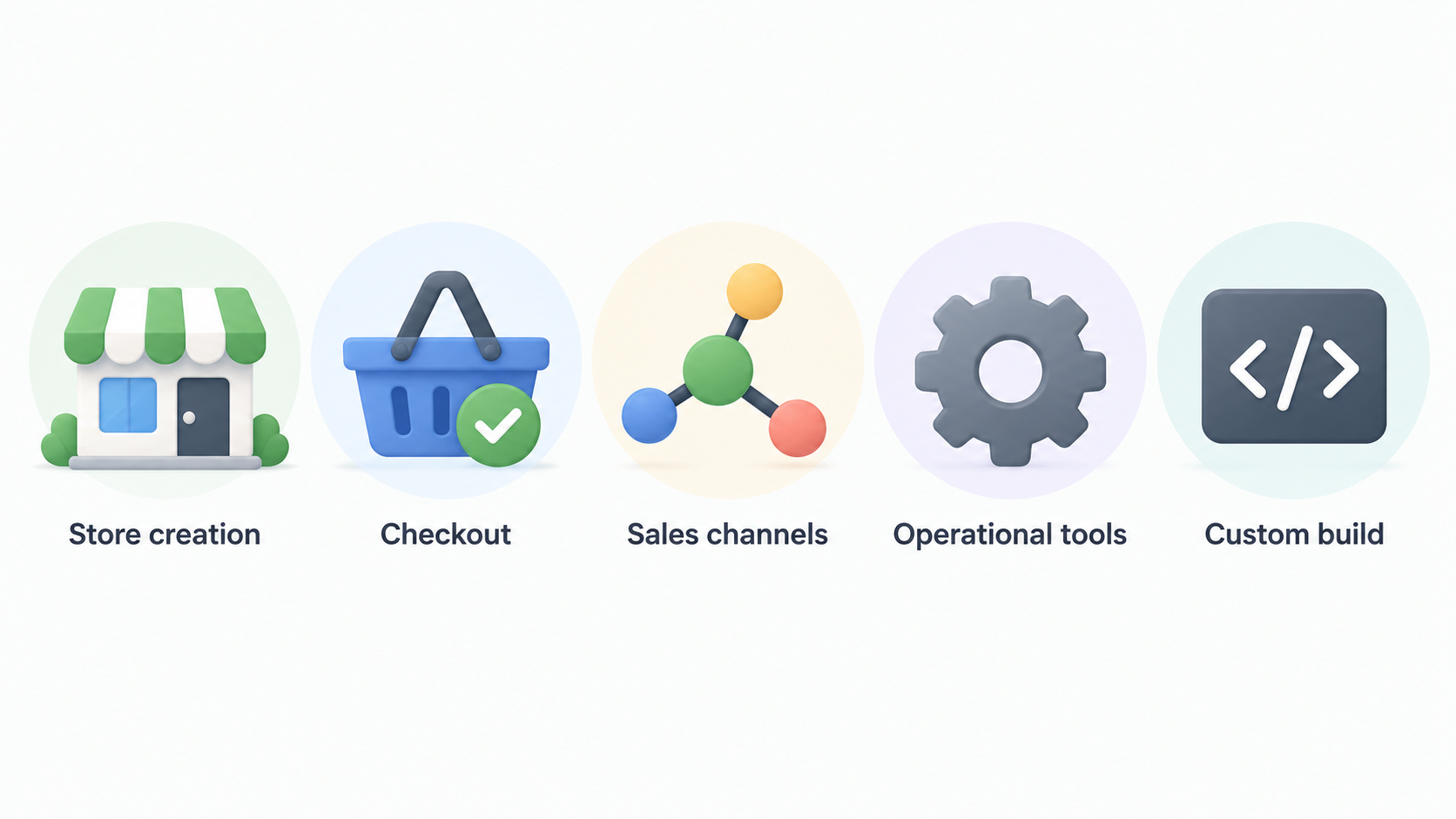
Shopify is a sensible option for many UK businesses that want to launch an online store without treating the initial build as a software project. Its appeal is straightforward: it combines store creation, checkout, sales channels and operational tools in one platform, while leaving room to move from a theme-led shop to a more custom build as needs change.
The strongest case for Shopify is a business that values a relatively clear starting point but expects its requirements to grow. Independent testing by TechRadar describes the platform as easy to use and highly scalable, citing its interface, app ecosystem, support and payment integrations as notable strengths. Shopify’s own UK materials set out several implementation paths, from themes and a visual editor to custom Liquid, APIs and headless builds.
The qualification matters. Shopify is not automatically the lowest-cost or most flexible answer for every merchant. Plan upgrades can become costly, some advanced capabilities sit on higher tiers, Basic has fewer staff accounts, and third-party payment gateways can involve transaction fees. A UK buyer should therefore assess the likely operating model—not just the launch checklist—before committing.
Bottom line: Shopify is a strong all-round contender for a UK store that needs an accessible start and credible growth options. It deserves closer comparison if tight budget control, extensive lower-tier customisation, or a highly specialised operating setup is the priority.
What Shopify Offers UK Merchants
AI-generated illustration — not a retailer product photo.
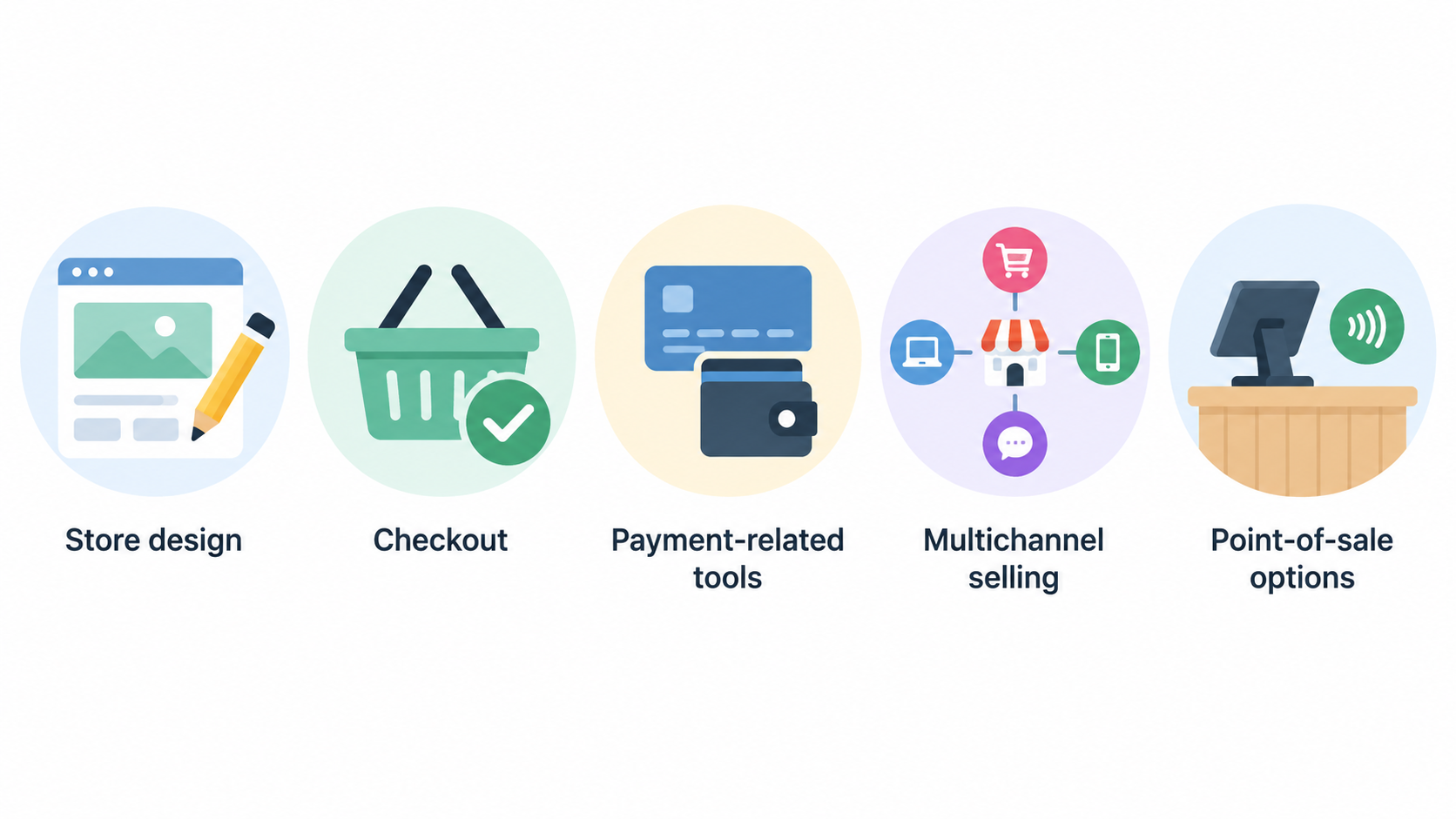
Shopify provides a hosted commerce platform for selling online and, according to its UK pricing page, in person and in AI chats. For a small business, that can reduce the number of separate services needed to get a shop live: the platform presents store design, checkout, payment-related tools, multichannel selling and point-of-sale options within the same broad product family.
There are several ways to build the storefront. A merchant can begin with a theme, use Shopify’s visual editor, or use AI-assisted store-design options described on Shopify’s online-store page. That route is likely to suit a team that wants to prioritise products, content and fulfilment over custom development in the early stages.
The platform also supports more involved implementation routes. Shopify says merchants can create a theme from scratch, use Custom Liquid, build with its APIs, or go headless with Hydrogen, its headless commerce toolkit. These options matter because a business does not necessarily have to abandon the platform when a standard theme no longer fits its design or integration requirements.
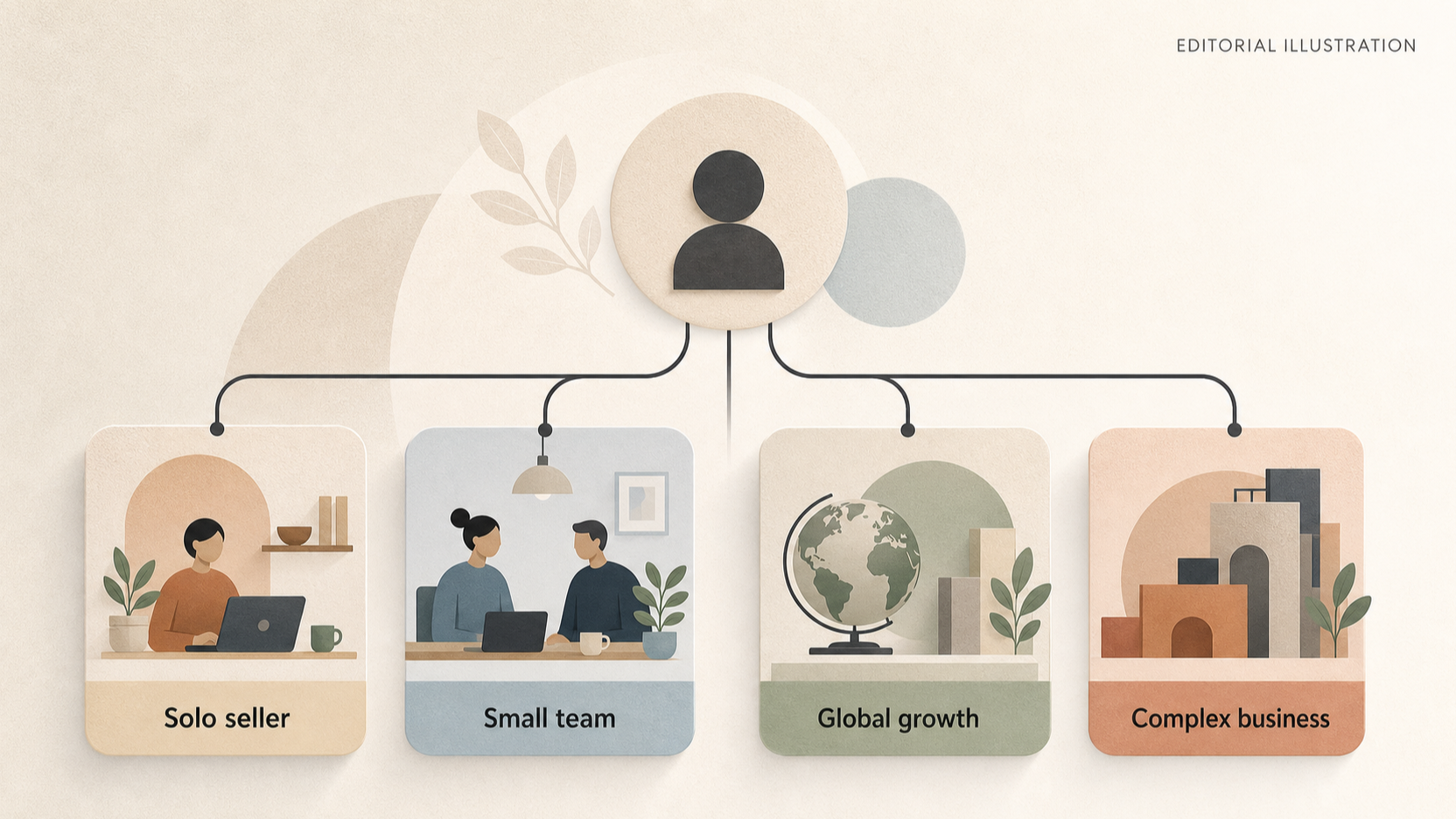
The plan ladder gives a rough indication of the intended progression. Basic is positioned for solo entrepreneurs; Grow adds features for small teams; Advanced adds global-reach features such as live third-party shipping rates and store tailoring by region; and Plus is positioned for complex businesses. The exact choice should follow the workflow a business needs now and the capabilities it is likely to need next.
Where Shopify Stands Out
Shopify’s principal advantage is the combination of approachability and scope. TechRadar’s review highlights a clean setup and interface, an expansive app ecosystem, strong scalability, 24/7 support, AI-powered design tools and many payment integrations. For a UK merchant, those strengths can be more valuable together than any one feature: a platform that is manageable at launch but has room for more channels, people and processes can reduce the pressure of switching systems during growth.
The build options reinforce that flexibility. A theme-based store offers a practical starting route, while custom themes, APIs and headless architecture provide different levels of control when a business has the budget and technical support to use them. That does not mean every merchant should choose the most complex route. In many cases, a well-selected theme and a focused set of essential tools will be easier to operate than a heavily customised storefront.
Shopify also makes infrastructure claims that may be reassuring for a store that depends on a reliable hosted service. Its UK online-store page states a 99.9% uptime rate and 300 points of presence worldwide. The same page promotes built-in AI across launch, management and scaling, while the pricing page lists an AI assistant for commerce across the Basic, Grow and Advanced plans. These are vendor claims rather than independent performance findings, so they are best treated as features to evaluate in a trial or demonstration against the business’s real workflow.
The platform’s checkout is another prominent selling point. Shopify says its checkout converts 15% better on average than other commerce platforms, and describes it as included across plans. That is a marketing claim, not a guarantee of conversion performance for an individual UK shop. Product range, pricing, traffic quality, shipping terms and the rest of the buying journey will still shape outcomes.
Costs, Limits, and Trade-Offs
A plan comparison should start with operating constraints, not just the monthly headline. Shopify’s UK pricing page positions Basic for solo entrepreneurs, Grow for small teams, Advanced for global reach and Plus for complex businesses. It lists card rates starting from 2% + 25p GBP for Basic, 1.7% + 25p for Grow, 1.5% + 25p for Advanced and 1.3% + 25p for Plus. Those published rates are useful reference points, but merchants should confirm the current pricing, eligibility and any relevant payment terms before choosing.
Staff access is a clear example of why the tier matters. Grow includes up to five staff accounts, Advanced up to 15, and Plus unlimited staff accounts. If several colleagues, agencies or operational roles need access, a lower-tier plan may become restrictive sooner than expected. TechRadar specifically identifies limited staff accounts on Basic as a downside.
Higher tiers also control particular operational and customisation options. Shopify lists live third-party shipping rates and regional store tailoring under Advanced, while Plus includes a fully customisable checkout, up to 200 POS Pro locations, unlimited B2B catalogues and priority 24/7 phone support. These features may be highly relevant for an international, omnichannel or complex B2B operation, but they should not be assumed necessary for a first store.
There are additional cost and flexibility questions beyond the core plan. TechRadar notes transaction fees on third-party gateways, costly plan upgrades, premium-theme expense, advanced features locked behind higher tiers and a complex pricing structure. It also judges lower-tier customisation to be limited. A disciplined buying process should map likely payment method, number of users, physical-sales needs, shipping requirements, desired theme or development work, and the features likely to trigger an upgrade.
Shopify Alternatives and Better-Fit Scenarios
AI-generated generic editorial illustration — not a retailer product photo and does not depict the reviewed product or service. Help readers translate the review's trade-offs into a practical fit-versus-compare decision.
 “Alternative” does not have to mean a named rival. The useful comparison is between Shopify’s operating model and the model a business actually needs. Shopify is a natural fit to investigate when a UK merchant wants a hosted platform, a theme-led start, integrated commerce tools and the option to become more custom over time.
A solo seller or new small business may find the Basic positioning attractive if the initial requirement is to sell online, in person or across channels with a manageable setup. However, the business should compare that convenience with the cost of required themes, apps, payment arrangements and possible future plan upgrades. A low-friction start is valuable, but it is not the same as a predictable total cost of ownership.
A growing team should pay particular attention to staff accounts, payment rates, shipping needs and regional selling. Shopify’s Grow plan adds up to five staff accounts, while Advanced adds up to 15 and features aimed at global reach. If the team’s workflow will exceed those limits, needs unusual approval processes, or depends on specialised integrations from the outset, compare platforms and implementation approaches on those requirements before migration pressure builds.
A business with distinctive design, content or integration demands should consider Shopify’s custom-theme, API and headless routes alongside other approaches. Shopify says it supports all of these paths, but they introduce a different trade-off: more control can mean more implementation and maintenance responsibility. The right question is not whether a headless build is more advanced; it is whether the commercial benefit justifies the added technical work.
Finally, a complex business should compare the full operational fit rather than rely on the Plus label alone. Shopify positions Plus for complex businesses and lists unlimited staff accounts, a fully customisable checkout, large-scale POS Pro availability and B2B catalogues. Those capabilities may be relevant, but a buyer should test them against its existing systems, internal expertise and delivery requirements.
Frequently Asked Questions
Is Shopify suitable for a first online store in the UK?
It can be. Shopify offers theme-based setup, a visual editor and plan positioning for solo entrepreneurs, while TechRadar rates its setup and interface positively. It is most suitable when a merchant wants a hosted commerce platform and is comfortable checking the full cost of themes, payment arrangements, apps and future upgrades before committing.
Which Shopify plan features matter most for a growing team?
Start with staff-account limits, payment-related rates, shipping needs and regional selling. Shopify lists up to five staff accounts on Grow and up to 15 on Advanced; Advanced also includes live third-party shipping rates and store tailoring by region. The most important feature is the one that removes a real operating constraint, not simply the most advanced feature available.
Can Shopify support a more customised or headless store build?
Yes. Shopify says merchants can create a theme from scratch, use Custom Liquid, work through its APIs, or build headless with Hydrogen. These routes can offer more control than a standard theme, but they also call for appropriate technical capability and a clear reason to take on additional complexity.
Sources
Related reading
- Best ecommerce platforms for UK small businesses: evidence-led choices by store need
- Shopify vs Wix for UK online stores: which platform fits your operating model?
- Wix ecommerce review for UK small businesses: practical fit and limitations
- Annual vs monthly ecommerce platform plans: when paying yearly can make sense
Editorial information: About our editorial team · Read our editorial policy · Read our affiliate disclosure.